Home Our Values Workshops Growth Map Contact Privacy
Personal Development Framework

The Growth Map

Not a fixed destination. A navigational tool for a journey that changes as you do.

What It Is

A map that gets redrawn.

The Growth Map is Ciraki's core framework for personal development. It is not a course. It is not a curriculum. It is a structured way of thinking about your own learning that is designed to stay useful as your life changes.

Think of it as a living document with four active layers: your current priorities, the habits that support them, the learning areas you are developing, and the reflection practice that keeps everything calibrated. These layers interact. When one shifts, the others adjust.
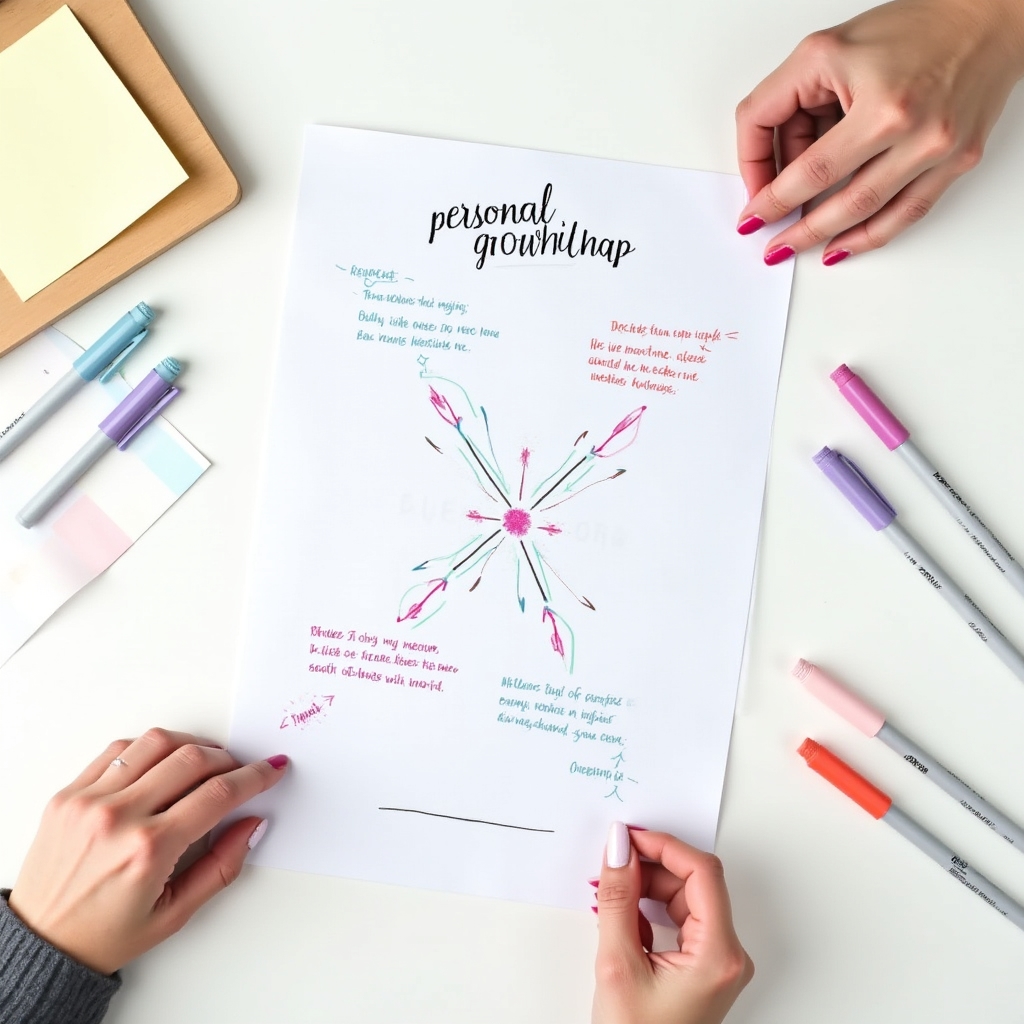
Close-up of a personal growth map framework laid out on a clean desk with colored markers and structured notes
The Four Layers

How the Growth Map is structured.

Each layer serves a specific function. Together, they create a system that is more than the sum of its parts.

Layer 1

Priority Anchors

The starting point. You identify two to four areas of your life that genuinely matter to you right now. Not aspirationally. Right now. These become the anchors that everything else connects to. They get reviewed every quarter and can change. That is the point.

Layer 2

Habit Infrastructure

The daily and weekly behaviors that make progress possible without requiring constant willpower. This layer maps your existing habits, identifies which ones support your Priority Anchors, and designs new ones where there are gaps. Small, specific, contextually anchored.

Layer 3

Learning Areas

The knowledge and skills you are actively developing. This is where courses, reading, practice, and workshops connect to your map. Learning areas are tagged to Priority Anchors so you can see which learning serves which priority. When a priority changes, you can see what to pause and what to continue.

Layer 4

Reflection Engine

The mechanism that keeps the whole system honest. Regular structured prompts, a quarterly calibration session, and an annual review that looks at the map as a whole. Without this layer, the other three become static. With it, the map stays alive.

Getting Started

Building your first Growth Map.

The initial setup takes about ninety minutes. Here is what that process looks like from the inside.

01

The Current State Audit

You start by mapping what is actually happening in your life right now, not what you wish was happening. We use a structured prompt set that covers work, relationships, health, learning, and creative pursuits. The goal is honest observation, not evaluation.

02

Priority Identification

From the audit, patterns emerge. You identify which areas are genuinely calling for attention and which are just generating noise. This step often produces surprises. What people think their priorities are and what the audit reveals are frequently different.

03

Habit and Learning Mapping

With priorities identified, you map which existing habits and learning activities connect to them. Then you identify the gaps and design specific, small additions. Not a complete overhaul. Targeted adjustments to an existing system.

04

Setting Review Triggers

You schedule your first quarterly review before you close the map. You also identify two or three life events that would trigger an unscheduled review. A job change. A move. A significant relationship shift. The review mechanism is built in from the start.

Copied!